
Natural Cosmetics and Soap Making
Natural cosmetics harness the power of natural, mostly plant-based ingredients and avoid synthetic additives. Create your own deodorants, creams, shampoos, and soaps, tailored precisely to your skin and individual needs.
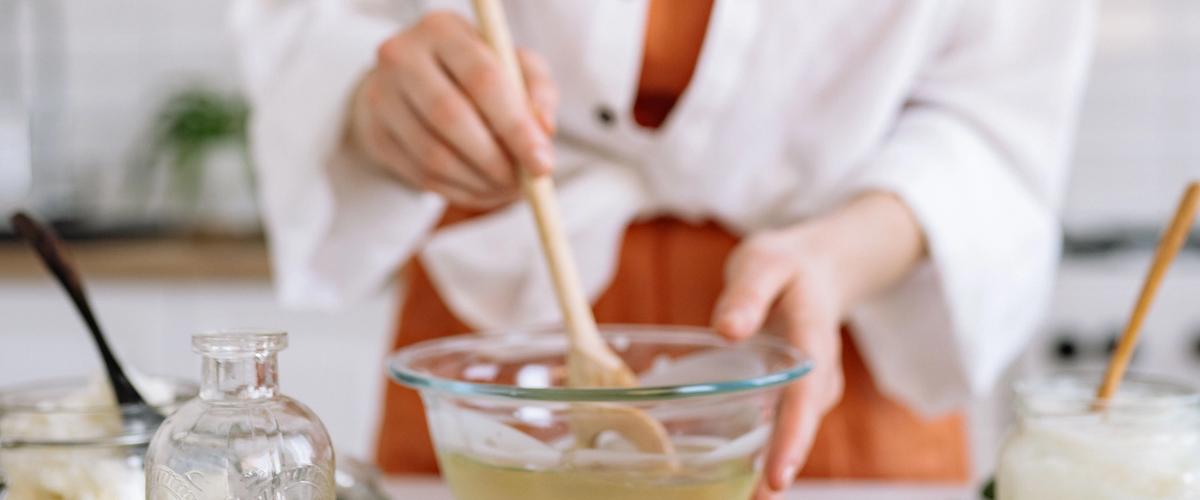
- Creams and lotions for face, hands, and body
- Body butters and gels
- Lip care sticks and lip balms
- Balms for the home first-aid kit
- Shower gel, shampoo, and hair masks
- Facial cleansing milk and lotions
- Deodorant
- Room and fragrance sprays
- Household cleaning products
Measuring & Testing Equipment: 9 precision scales (accurate to 1 g), measuring spoons, 8 glass thermometers, pH test strips for pH monitoring
Containers, Moulds & Tools: 8 pans for melting ingredients in a water bath, 4 electric cookers with 2 hotplates each, 1 mini hand mixer, glass stirring rods and spatulas, heat-resistant graduated beakers (100 ml, 250 ml, 400 ml), 1 silicone mould with floral pattern (for 6 soaps or body butters)
Packaging & Containers: deodorant rollers, aluminium tubes (50 g), lipstick tubes, disposable suppository moulds, 100 ml glass bottles with lotion pumps or spray tops, aluminium screw-top tins (silver, with window), aluminium screw-top tins (50 ml), 200 ml cosmetic bottles with screw caps, assorted labels
Hygiene & Safety: disinfecting alcohol, safety equipment (gloves, masks, etc.)
Ingredients: demineralised, destillated water
Recipes: Manuals containing basic formulations for a wide range of skincare products.
Ingredients
We kindly ask for your understanding that raw materials are currently available exclusively to participants of our natural cosmetics courses.
Natural cosmetics offer countless possibilities, and accordingly there is a vast range of ingredients available. Since each person wishes to create different products, it is generally more practical to source the specific ingredients needed for their own formulations. In addition, our storage and refrigeration space is limited, which means we can only keep small quantities of materials on site.
An exception is demineralized (distilled) water, which can be purchased at the studio for CHF 0.50 per 100 ml.
Knowledge and Safety
Making natural cosmetics requires a solid understanding of ingredients, hygiene, preservation methods, and formulation development. If you would like to learn how to create your own natural cosmetics safely and professionally, we regularly offer courses that cover the essential foundations and best practices.
Our Philosophy
We are committed to using high-quality, natural, and cruelty-free ingredients.
Courses & dates
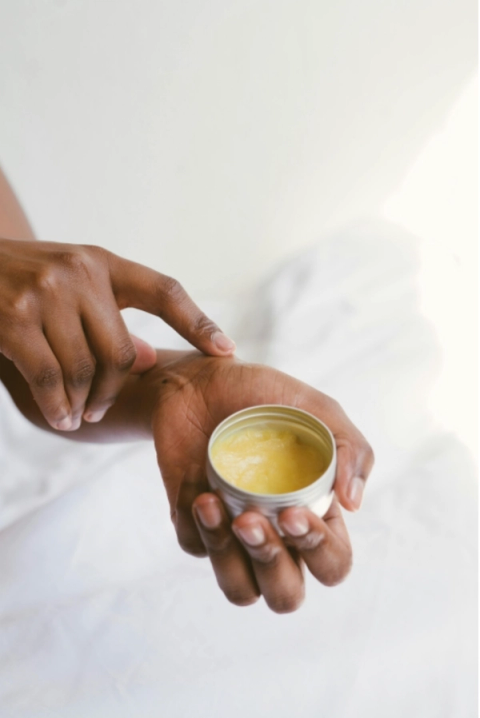
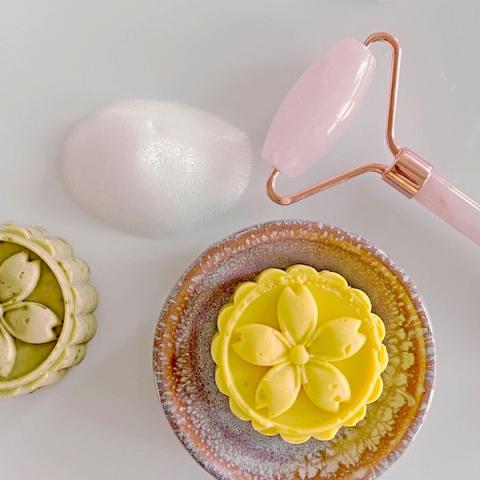
Prefer to work freely and come by regularly?
As a member you get access to the atelier, the full equipment, and a community that creates alongside you. Or drop in on an Open Atelier — we're happy to see you.
Frequently asked questions
Natural cosmetics are made from natural and naturally derived raw materials, such as plant oils, butters, waxes, hydrosols, essential oils and minerals. These raw materials are obtained and processed as gently as possible. Synthetic fragrances and colourants, silicones and petroleum-based ingredients such as paraffin are not used. Because the term natural cosmetics is not legally protected, certification labels such as NATRUE or COSMOS offer reliable guidance. They set strict criteria and focus on sustainability at every stage, from the raw materials through production to packaging.
Not always. Some ingredients are derived from natural raw materials but are gently modified so that they work properly. This applies, for example, to emulsifiers or mild surfactants made from coconut or sugar. Green cosmetics are a different category. They are 100% natural and contain no preservatives at all. As a result, they only keep for a short time and are hardly suitable for sale. Green cosmetics are made fresh in small batches, and the raw materials depend on the season. In return, you get a product that is unprocessed, fresh and usually especially rich in active ingredients.
No. Besides decorative cosmetics, you can make a wide range of care products for both women and men, as well as products for your home first-aid kit such as wound and skin care salves. Natural raw materials can also be used to make household products such as cleaning agents or laundry detergent.
More than you might think. Almost any product can be made according to the principles of natural cosmetics, such as face and body creams, lip balms, salves and balms, shampoos, soaps, shower gels, deodorants, scrubs and make-up. Natural raw materials can also be used to make household products such as cleaning agents or laundry detergent.
Conventional cosmetics may contain almost any approved ingredient, including synthetic preservatives, fragrances and colourants, silicones and mineral oils. These substances are inexpensive, give products a long shelf life and create a particular feel on the skin. Natural cosmetics deliberately avoid them and instead rely on skin-compatible plant-based raw materials that truly care for the skin and are readily biodegradable.
Conventional cosmetics are designed above all to meet industrial requirements: they need to be inexpensive, have a long shelf life and always look and feel the same. Many of the substances used for this are petroleum-based, do little to care for the skin and can harm the environment. Individual ingredients regularly come under scrutiny and are restricted or banned. How different substances interact with one another is often still poorly understood.
All the ingredients in a cosmetic product are listed in the INCI list on the packaging. You can check this list on websites such as www.hautschutzengel.de, or scan the barcode with an app like CodeCheck. This quickly shows you which substances are considered questionable. With homemade natural cosmetics, the question doesn’t even arise, because you know exactly what goes into them.
You know exactly what goes into your product and can tailor it to your skin, your favourite scent and your needs. You save on packaging, protect the environment, and making the products yourself is fun. On the other hand, homemade products don’t keep as long as shop-bought ones, especially if they contain water. Working cleanly and weighing ingredients accurately are important, and even natural substances such as essential oils can irritate the skin if used in too high a dose.
Unfortunately not. For hygiene and organisational reasons, making natural cosmetics is not possible during Open Studio. However, we regularly offer production workshops for anyone who has completed the Natural Cosmetics Basics course and would like to make their own products, whether as gifts or for themselves. You’ll have all the tools, raw materials and packaging you need, and you only pay for the materials you use. For personal use, buying your own raw materials is often not worth it, as many of them only keep for a limited time. Plus, it’s fun to spend a relaxed day mixing and stirring together with others. For more infos see the course section.
In principle, yes, but you are then legally responsible for their safety. Simplified rules apply to handmade cosmetics that you sell locally and on a small scale, for example at a market or bazaar. If you want to sell online or in a shop, or make products for children, you need a safety report from a qualified expert. In every case, you are required to carry out self-monitoring and follow Good Manufacturing Practice (GMP). This includes working hygienically, documenting production, for example with cleaning and production records, and labelling your products correctly. The responsible authority is the cantonal laboratory in the canton where you make your products, and it can also tell you whether you need to register. You can find your canton’s laboratory at www.kantonschemiker.ch.
Yes, in our courses and production workshops. There you’ll find a selection of basic ingredients such as plant oils, butters, waxes, emulsifiers and essential oils, and you only pay for what you use. If there’s a particular raw material you’d like, just let us know. Please understand, however, that our stock is limited and we don’t sell raw materials for use at home.